

 Local culture
The southern state of Kerala shelters some of the most elaborate performance heritages in Asia. Travelers seeking genuine encounters will find that traditional arts and cultural experiences in Kerala offer a direct window into centuries of living history.
This guide provides a detailed pathway to understanding and witnessing these classical forms first-hand. It highlights the main art forms, where to see them, and how to engage with them respectfully during your 2026 travels.
The table below summarizes some of the most celebrated traditional arts and cultural experiences in Kerala that you can witness during your visit:
| Art Form | Performance Type | Key Highlight |
|---|---|---|
| Theyyam | Ritual Dance-Drama | Striking facial makeup and divine trance states |
| Kathakali | Classical Dance-Drama | Stylized hand gestures (mudras) and expressions |
| Kalaripayattu | Ancient Martial Art | Athletic physical conditioning and weaponry |
| Mohiniyattam | Feminine Classical Dance | Graceful swaying movements and white Kasavu sarees |
The Ritual Theater of Theyyam
Northern Kerala turns into a sacred stage during the Theyyam season, which runs from October to May. This ritual performance merges dance, mime, and ancient tribal worship to channel divine spirits. Performers wear massive headgears called mudi and paint their faces in intricate orange and red patterns.
Securing a place at a village shrine allows travelers to feel the raw energy of this ritual. For travelers seeking genuine spiritual connections, witnessing a Theyyam performance is one of the most profound traditional arts and cultural experiences in Kerala. Visitors must follow local customs, such as removing shoes and respecting sacred boundaries.
Key elements of the Theyyam ritual include:
- Detailed facial painting using natural pigments and organic dyes.
- Intense rhythmic drumming using the traditional chenda instrument.
- A state of trance where the performer speaks as the deity.
Kathakali and the Language of Mudras
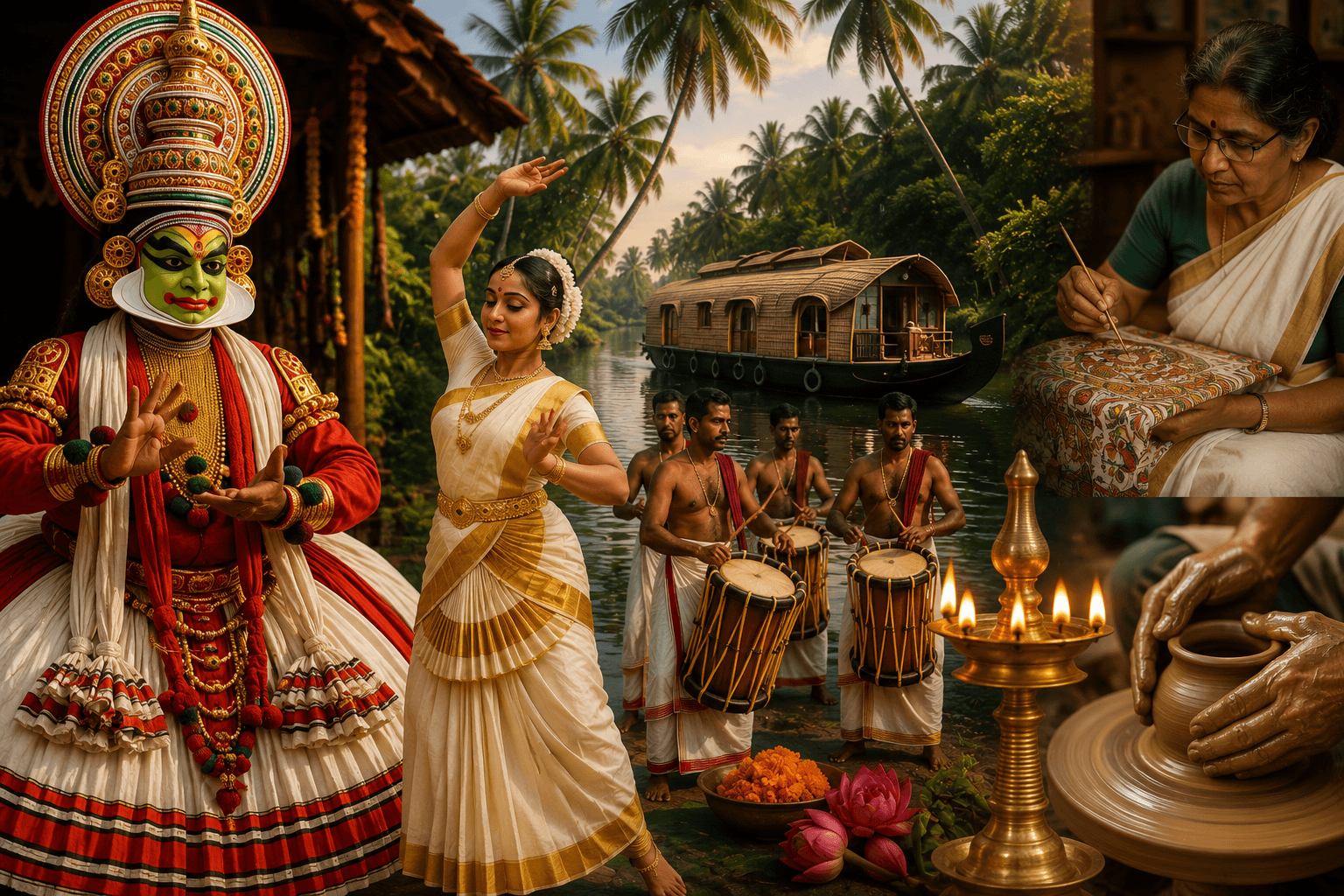
Kathakali stands as the signature dance-drama of the region, recognized globally by its elaborate makeup and stylized movements. The performance dramatizes stories from Hindu epics like the Ramayana and Mahabharata. Actors undergo years of demanding physical training to control their facial muscles and eye movements.
Watching a pre-show makeup session reveals the immense preparation behind this art. This preparation forms a core part of the local cultural heritage. Artists spend up to four hours laying down rice paste and natural colors.
The makeup styles denote specific character types:
- Paccha represents noble and heroic characters like kings and gods.
- Kathi denotes characters with vice, such as royalty with evil traits.
- Kari is reserved for aggressive forest deities or demonic figures.
Kalaripayattu and the Path of the Warrior
Dating back at least two thousand years, Kalaripayattu is widely considered the oldest surviving martial art in the world. It unites physical agility, weaponry, and traditional massage systems based on Ayurveda. The practice takes place in a specially constructed pit called a kalari.
Students learn to master their bodies before handling dangerous metal weapons. Exploring Kalaripayattu offers a distinct perspective on the physical training that underpins many traditional arts and cultural experiences in Kerala. The movements are inspired by the strength and grace of animals like the tiger and elephant.
The training progression follows strict developmental stages:
- Meythari: Physical conditioning exercises to increase flexibility and balance.
- Kolthari: Combat training using wooden staffs of various lengths.
- Ankathari: Advanced combat using sharp metal weapons like swords and shields.
Mohiniyattam and the Grace of the Enchantress
Mohiniyattam represents the feminine classical dance form of the state, marked by gentle, swaying movements. The term translates to the dance of the enchantress, referencing mythological narratives of the divine feminine. Dancers wear elegant white sarees with bright golden borders, known as Kasavu.
The performance employs subtle facial expressions and delicate hand gestures to convey deep emotions. This lyrical dance represents the gentler side of the diverse traditional arts and cultural experiences in Kerala, contrasting with the intense energy of martial arts. Watching a live performance highlights the diverse range of artistic expressions found in the region.
Where to Find Traditional Arts and Cultural Experiences in Kerala
Finding genuine performances requires knowing where to look beyond commercial tourist hubs. State-run institutions and temple festivals offer the most traditional settings for travelers. Planning your itinerary around these cultural centers helps guarantee a rewarding journey.
The Kerala Kalamandalam in Cheruthuruthy serves as the premier academy for classical performing arts. Visitors can book guided tours to watch students train under legendary masters. This institution preserves the high standards of traditional art forms.
Temple festivals, particularly in Thrissur and Palakkad, feature grand percussion ensembles like Panchavadyam and Melam. These open-air events are free to the public and showcase dozens or even hundreds of artists playing in perfect synchronization. They represent the high point of community-driven celebrations.
Etiquette and Planning for Cultural Explorations
Respecting local norms helps foster a positive experience for both travelers and local communities. Many performances take place within active temple complexes that maintain strict dress codes. Wearing modest clothing is mandatory, and some temples restrict entry to the inner sanctum for non-Hindus.
Photography rules vary significantly between venues. While commercial theaters encourage photos, sacred rituals like Theyyam require extreme discretion. Always ask for permission before photographing performers during their spiritual preparations.
To get the most out of these traditional arts and cultural experiences in Kerala, visitors should follow local customs and temple guidelines. Supporting local artists through ticket purchases and direct donations helps maintain these ancient lineages. Your presence contributes directly to the preservation of global cultural heritage.
A Lasting Impression
Kerala offers an extraordinary depth of heritage that goes far beyond its famous backwaters and beaches. From the intense devotion of Theyyam to the athletic precision of Kalaripayattu, these forms define the state’s identity. Ultimately, prioritizing traditional arts and cultural experiences in Kerala helps secure a deeply rewarding and respectful journey through South India.
Preserving these arts relies on conscious travelers choosing genuine venues and respecting local traditions. Plan your journey during the festival season to witness these spectacular art forms in their true communal settings.


Comments are closed