



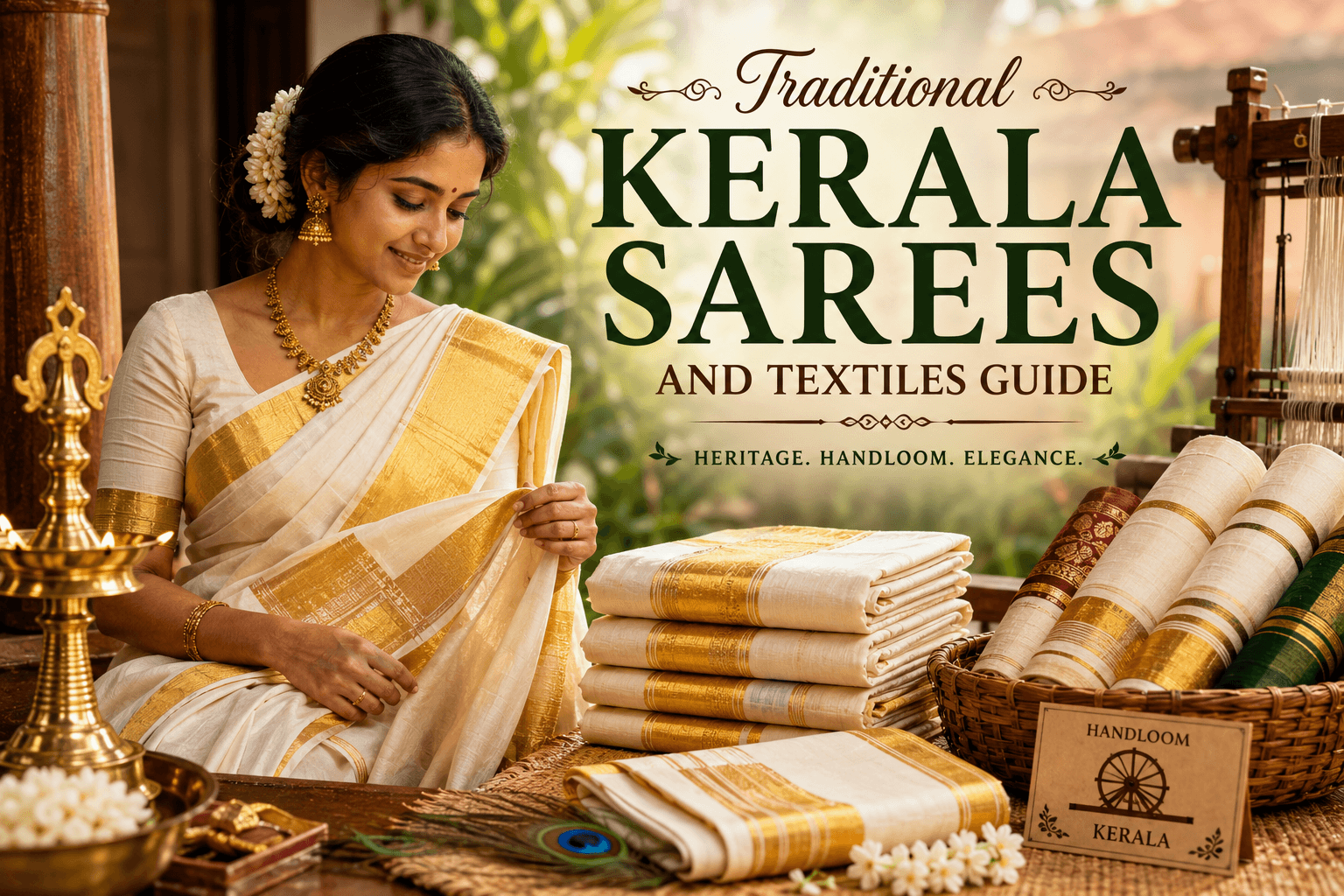
 Kerala Shopping Festival
Kerala’s rich textile heritage reflects centuries of craftsmanship, tradition, and elegance. Known for its lightweight cotton fabrics, intricate handloom weaving, and the iconic white-and-gold Kasavu saree, Kerala offers timeless fashion that beautifully blends simplicity with sophistication.
Whether you’re attending a festival, shopping for a wedding, or looking for an authentic souvenir, Kerala’s traditional textiles showcase the state’s cultural identity and artistic excellence. This guide explores Kerala’s famous sarees, weaving traditions, textile centers, and shopping destinations.
The Iconic Kasavu Saree
The Kasavu Saree, also known as the Kerala Saree or Set Saree, is the most recognizable traditional attire of Kerala. Characterized by its off-white or cream-colored fabric with a golden zari border, it symbolizes purity, grace, and cultural pride.
Traditionally woven using fine cotton, modern Kasavu sarees are also available in silk, linen, tissue, and cotton-silk blends.
Features
- Cream or ivory-colored body
- Golden zari border
- Lightweight and breathable fabric
- Elegant, minimalist design
- Comfortable for Kerala’s tropical climate
The Kasavu saree is a timeless choice for women of all ages and remains one of Kerala’s most treasured garments.
The History of Kerala Handloom
Kerala’s weaving tradition dates back hundreds of years, with handloom weaving flourishing in villages across the state. Skilled artisans have preserved traditional weaving techniques, passing them down through generations.
Historically, Kerala textiles were influenced by trade with Arab, Chinese, and European merchants, while still maintaining their distinctive local identity.
Today, handloom weaving supports thousands of artisans and continues to play an important role in Kerala’s cultural and economic landscape.
Types of Traditional Kerala Sarees
1. Kasavu Saree
The classic white-and-gold saree remains the most popular choice for festivals and weddings.
Ideal for:
- Onam
- Vishu
- Temple visits
- Weddings
- Cultural celebrations
2. Set Mundu
The traditional Set Mundu consists of two separate pieces rather than a single draped saree.
Traditionally worn during:
- Religious ceremonies
- Festivals
- Classical performances
Many women continue to wear this elegant attire during Onam celebrations.
3. Kasavu Silk Saree
Silk versions of the Kasavu saree feature luxurious textures and intricate zari work, making them ideal for bridal wear and grand occasions.
Popular designs include:
- Temple motifs
- Peacock patterns
- Floral borders
- Traditional Kerala-inspired artwork
4. Handloom Cotton Sarees
Kerala’s handloom cotton sarees are perfect for everyday wear due to their comfort, durability, and breathable fabric.
They are available in:
- Pastel shades
- Checks
- Stripes
- Contemporary woven borders
5. Contemporary Designer Kerala Sarees
Modern designers have reimagined Kerala sarees by incorporating:
- Colored borders
- Embroidery
- Digital prints
- Hand-painted designs
- Metallic accents
These styles blend traditional craftsmanship with contemporary fashion.
Kerala’s Famous Handloom Centers
Several regions in Kerala are known for their exceptional weaving traditions.
Balaramapuram
Located near Thiruvananthapuram, Balaramapuram is internationally recognized for its handwoven cotton and Kasavu textiles.
Known for:
- Fine cotton weaving
- Traditional techniques
- Authentic Kasavu sarees
- Mundu and dhoti production
Chendamangalam
One of Kerala’s oldest weaving villages, Chendamangalam is famous for producing premium-quality handloom sarees and household textiles.
Popular products include:
- Kasavu sarees
- Towels
- Bed linens
- Cotton garments
Kuthampully
Situated near Thrissur, Kuthampully is celebrated for its high-quality Kerala sarees and temple textiles.
Its skilled artisans produce:
- Traditional Kasavu sarees
- Temple garments
- Bridal collections
- Cotton fabrics
Kannur
Kannur has a long history of producing handcrafted cotton fabrics, home furnishings, and export-quality textiles.
Popular products:
- Handloom fabrics
- Curtains
- Bed sheets
- Table linen
- Decorative textiles
Traditional Kerala Fabrics
Kerala’s textile industry produces a variety of natural fabrics.
Cotton
The most widely used fabric, prized for its softness, breathability, and comfort.
Silk
Used for premium bridal sarees and festive attire.
Cotton-Silk Blend
Combines the comfort of cotton with the richness of silk.
Linen
Increasingly popular for modern Kerala-inspired fashion due to its lightweight texture.
Weaving Techniques
Kerala handloom weaving emphasizes precision and simplicity.
Traditional techniques include:
- Handloom weaving
- Zari border weaving
- Natural dyeing
- Fine thread weaving
- Traditional jacquard work
Each saree is carefully woven by skilled artisans, making every piece unique.
Traditional Clothing Beyond Sarees
Kerala’s textile heritage extends beyond sarees.
Popular traditional garments include:
- Mundu
- Neriyathu
- Dhoti
- Kasavu shawls
- Traditional blouses
- Handwoven scarves
- Cotton kurtas
- Children’s festive wear
These garments are worn during festivals, weddings, and cultural events.
When Kerala Sarees Are Worn
Traditional Kerala attire is especially popular during:
- Onam
- Vishu
- Temple festivals
- Weddings
- Classical dance performances
- Religious ceremonies
- Cultural events
- Family celebrations
The white-and-gold ensemble has become an enduring symbol of Kerala’s festive spirit.
Best Places to Shop for Authentic Kerala Sarees
For genuine handloom products, visit:
- Government handloom emporiums
- Balaramapuram weaving centers
- Chendamangalam handloom cooperatives
- Kuthampully textile shops
- Kerala Handloom showrooms
- Local artisan markets
- Heritage textile stores
Buying directly from weavers and cooperatives helps support local artisans and ensures authenticity.
How to Identify an Authentic Handloom Saree
When shopping, keep these tips in mind:
- Look for slight weaving variations that indicate handcrafted work.
- Check the quality of the zari border and finishing.
- Feel the softness and breathability of pure cotton.
- Buy from trusted handloom cooperatives or certified stores.
- Look for official handloom labels where available.
Authentic handloom sarees often have a unique texture and craftsmanship that machine-made versions cannot replicate.
Caring for Your Kerala Saree
To preserve its beauty:
- Dry clean silk and zari sarees when needed.
- Hand wash cotton sarees using mild detergent.
- Dry in the shade to prevent fading.
- Store folded in a cool, dry place.
- Wrap zari sarees in soft cotton cloth for long-term storage.
- Refold occasionally to avoid permanent creases.
Proper care ensures your saree remains beautiful for years.
Why Kerala Textiles Are Special
Kerala textiles are admired for their understated elegance, exceptional comfort, and cultural significance. Every handwoven saree reflects generations of craftsmanship, making it more than just a piece of clothing—it is a symbol of heritage and artistry.
Whether worn during a festival, gifted for a wedding, or collected as a travel souvenir, a Kerala handloom saree carries the timeless charm of the state’s rich traditions.


Comments are closed